

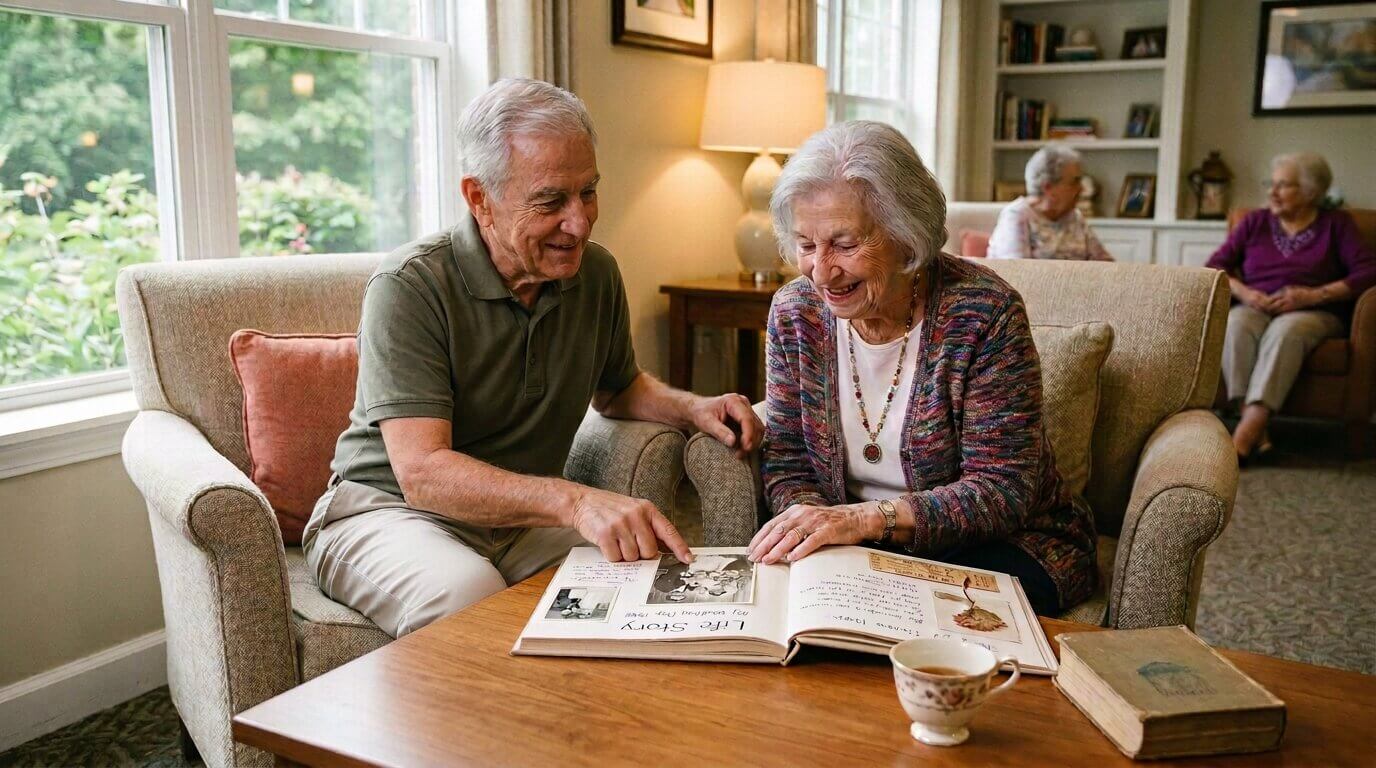
When someone you love is living with memory loss, it can feel like parts of who they are are becoming harder to reach. You still see the person you know—their habits, their humor, the little details that make them feel like themselves—but you want others to see that too. That’s where a life story can help bridge the gap between care and connection.
A life story in memory care captures the people, places, routines, and experiences that shape who your loved one is. It gives care teams meaningful context they can use every day to guide conversations, activities, and support. When these details are woven into daily life, they can help reduce anxiety, spark recognition, and create moments that feel familiar and reassuring.
Key Takeaways
- A life story in memory care captures personal history, routines, and preferences to guide daily care.
- Familiar details like music, meals, and routines can help reduce anxiety and improve comfort.
- Life stories support a stronger connection by helping caregivers engage in more natural, meaningful ways.
- Families and care teams work together to build and update the life story over time.
- Personalized care approaches, like those at Juniper Village at Williamstown, use life stories to create more responsive support.
What Is a Life Story in Memory Care?
A life story is a simple but meaningful way to capture the details that make your loved one who they are. It brings together personal history, relationships, routines, and preferences into something that care teams can actually use. Rather than relying only on clinical information, it gives caregivers a clearer picture of the person behind the diagnosis.
This information becomes part of daily care. It helps shape how team members start conversations, plan activities, and respond in moments of confusion or stress. When care reflects what feels familiar, the environment becomes easier to navigate and more comforting.
Why Life Stories Matter in Memory Care
Life stories influence more than conversation—they shape how care feels on a daily basis. When caregivers understand what matters most to your loved one, they can create interactions and routines that feel more natural and supportive.
The Power of Personal Connection
Familiar details can help someone feel more grounded in their surroundings. A favorite song, a well-known name, or even a scent tied to a past memory can create a noticeable shift in mood and comfort. These moments don’t need to be dramatic to be meaningful—they simply help someone feel more at ease. When care teams understand what matters to your loved one, interactions become more natural.
How It Shapes Day-to-Day Care
Knowing your loved one’s background allows caregivers to tailor everyday experiences in thoughtful ways. A former teacher might enjoy helping with group activities, while someone who loved cooking may respond well to time spent in the kitchen. These small adjustments can make routines feel more personal and engaging.
What to Include in a Life Story
A strong life story doesn’t need to be complicated, but it should be thoughtful. The goal is to capture the details that help others understand what feels familiar, meaningful, and comforting. Starting with a few key areas makes it easier to build something that care teams can use right away. Each one adds a different layer of understanding, giving caregivers more ways to connect throughout the day.
People, Places, and Milestones
Begin with the relationships and experiences that have shaped your loved one’s life. Include close family members, lifelong friends, and even pets that held special meaning. Adding familiar places—like a hometown, favorite vacation spot, or long-time residence—helps provide context that can guide conversations.
Sensory Details That Feel Familiar
Sensory cues often carry strong emotional connections. Favorite meals, familiar music, and scents tied to home or past experiences can quickly bring comfort. Even small details, like how someone takes their coffee or the rhythm of their daily routine, can make a difference. When something feels recognizable, it can ease tension and help your loved one settle more comfortably into their surroundings.
Daily Routines and Habits
Daily patterns often stay with someone even as memory changes. Think about how your loved one typically structured their day—when they liked to wake up, how they spent their mornings, or what helped them wind down in the evening. These habits can offer a strong foundation for building consistent routines in memory care.
How Families and Care Teams Use Life Stories
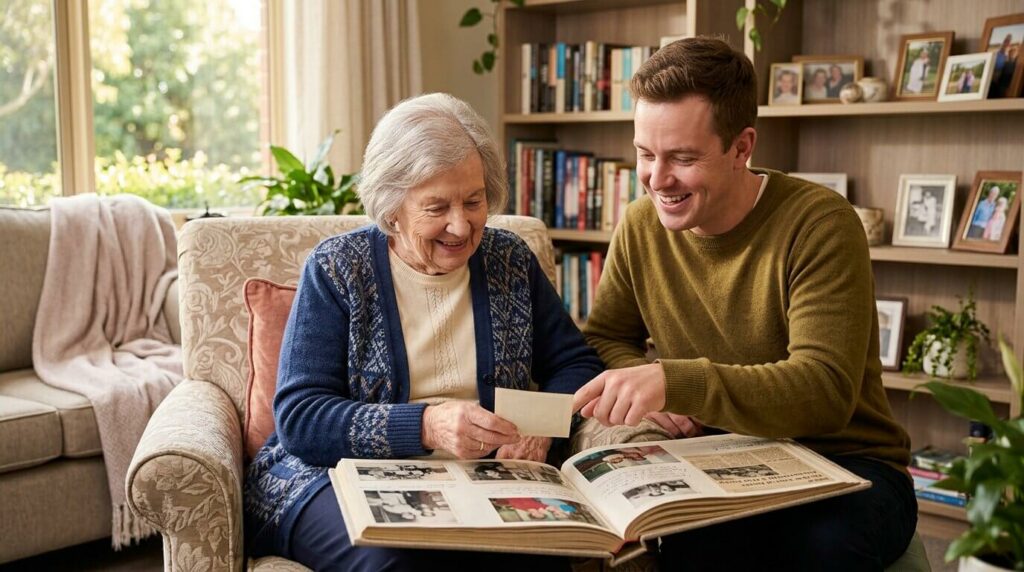
A life story works best when it’s shared and updated over time. It’s not a one-time document—it’s something that grows as your loved one’s needs and preferences evolve. This ongoing collaboration helps ensure care remains aligned with what feels familiar and meaningful.
Families often provide the most personal details, from photos to stories that highlight important moments. Care teams then use that information to guide daily interactions and adjust support as needed. When possible, your loved one can also remain part of the process, contributing in ways that feel comfortable.
Life Stories and Memory Care at Juniper Village at Williamstown
Each of our memory care communities is accredited by the Alzheimer’s Foundation of America’s Excellence in Care program, an important distinction that reflects our commitment to safe, compassionate, and person-centered dementia care.
At Juniper Village at Williamstown, life stories play a central role in shaping how care is delivered. Rather than following a fixed routine, the approach focuses on adapting daily experiences to reflect each person’s background and preferences. This creates a more flexible and responsive environment.
Here, care is shaped around real experiences, not assumptions, allowing for more thoughtful and responsive support. Families remain an important part of that process, contributing insights that help refine care over time. Schedule a tour today to learn how a life story approach can support your loved one’s experience.